Showing posts with label Japan. Show all posts

Saturday, May 3, 2014

Japan to conduct island defence drill amid tension with China


Photo Wikipedia.


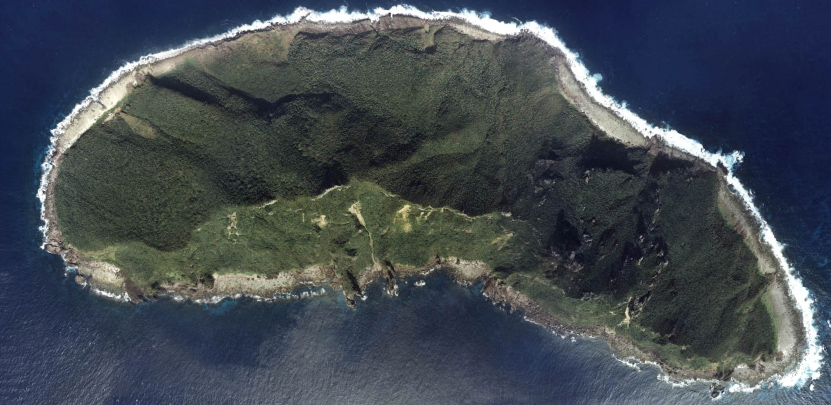
Japan will conduct a military exercise this month to practice defending an island, the Defence Ministry said on Thursday, underscoring concern about East China Sea islands controlled by Japan but claimed by China.The dispute over the islands, called the Senkaku in Japan and Diaoyu in China, has raised fears of a clash between the Asian neighbours which could even drag in the United States.

Separately, China said on Wednesday it would carry out naval exercises with Russia in the East China Sea in what it called a bid to deepen military cooperation.Japan's Defence Ministry said the island defence exercise would run from May 10 to May 27 on a small uninhabited island in the Ryukyu chain, some 600 km (375 miles) northeast of the disputed isles.Some parts of the exercise will be held in southwestern Japan's Nagasaki prefecture and waters off Okinawa Island's east coast. Okinawa is home is a major US military base and Japan also bases forces there.

It will be the first time that Japan's military, known as the Self-Defence Forces, will use an actual island for island defence training involving its ground, air and maritime divisions.About 1,300 troops, as well as several fighter jets and destroyers, will practice landing on and retaking the island, the ministry said.But it said the exercise was not a response to the tension with China. "Boosting island defence is something that has been mentioned in the defence white paper in recent years. This is not a drill that is responding to the current security situation surrounding Japan," a ministry spokesman said.

US President Barack Obama said last month while on a visit to Japan that the disputed islands were covered by a US-Japan security treaty, angering China.Last month, Japan announced it would break ground on a radar base in the area, on a tropical Japanese island close to Taiwan.
The radar station on Yonaguni Island, just 150 km (93 miles) from the disputed islands in the East China Sea, marks Japan's first military expansion at the western end of its island chain in more than 40 years.


http://news.asiaone.com/news/asia/japan-conduct-island-defence-drill-amid-tension-china


Japan puts early-warning aircraft on Okinawa amid China's moves


Japan has permanently assigned a new early-warning aircraft unit to Naha Air Base on Okinawa in response to Chinese probing around its southern island chain, officials say.

The Asahi Shimbun reported that four E-2C aircraft and approximately 130 members of the Japan Air Self Defense Force have been permanently repositioned from Misawa Air Base in northern Japan. The aircraft from the 603rd Airborne Unit will be responsible for surveillance and patrolling the peripheral airspace of the southwestern region, according to a Defense Ministry spokesman.The move comes after Japan’s Ground Self-Defense Force broke ground last month on a Coastal Monitoring Squadron base at Yonaguni, Japan’s westernmost island. Experts have said Japanese expansions could be seen as a provocation by China and further inflame tensions in the region.

Officials from U.S. Forces Japan declined to comment.Defense Minister Itsunori Onodera attended a ceremony April 20 at Naha Air Base to commemorate the establishment of the new unit.“The number of scrambles against Chinese aircraft quadrupled in the past four years,” he told reporters following the ceremony. “The unit with E-2C early-warning aircraft was assigned newly here at Naha Air Base to enhance the early-warning and surveillance mission. The assignment of the new unit is important for Japan to continue to defend our territory, waters and skies.”

Onodera later told a news conference that having a defense force base on the island is critical for Japan’s security.“This island is located in the westernmost point of our country, therefore, the coastal monitoring mission on an island like this is crucially important for Japan’s security,” he said.To replace the aircraft moving to Okinawa, the Airborne Early Warning Group and the 601st Airborne Unit were assigned to Misawa, the statement said.


http://www.stripes.com/news/japan-puts-early-warning-aircraft-on-okinawa-amid-china-s-moves-1.281093

Friday, May 2, 2014

Imaginary video shows Japanese stealth aircraft soundly defeating the PLAN

All Japanese missiles hit but none of the PLAN missiles do.
Video shows missiles score direct hit on 2 PLAN aircraft carriers out of which one sinks.

Nice video to watch with kids.


Sunday, April 27, 2014

Power in numbers: China surpasses Japan with surface combat ships


China has surpassed Japan in the construction and purchasing of new surface combat vessels, according to an Apr. 25 article on the Canada-based Kanwa Defense Review operated by military analyst Andrei Chang, also known as Pinkov.China's surface combat vessels may not be as good as their Japanese counterparts in terms of quality, the article said, but the People's Liberation Army (PLA) Navy has a greater number of destroyers and frigates equipped with active electronically scanned array radar. The PLA Navy currently has six Type 052C guided-missile destroyers, each carrying up to 49 HQ9 air defense missiles. In addition, the vessel can fire YJ-62 anti-ship cruise missiles, which have a range of 280 kilometers.

The country has also completed the construction of two Type 052D destroyers based on the Type 052C, and the new vessel can carry 64 HQ9 air defense missiles. Four more Type 052Ds are under construction at the Dalian and Jiangnan shipyards.The PLA Navy will likely operate between 10-12 Type 052C and Type 052D destroyers by 2015, but China will still lag behind the United States and Japan in building quality vessels, according to Kanwa.

The Japan Maritime Self-Defense Force (JMSDF) currently has four Kongo-class and two Atago-class destroyers. Equipped with the Aegis Ballistic Missile Defense System and RIM-161 Standard Missile 3, all six destroyers are twice as powerful as their Chinese counterparts in intercepting enemy aircraft and missiles. The JMSDF destroyers are also better than the PLA Navy destroyers in anti-submarine, electronic and cyber warfare, the article said.Despite a disparity in quality, China has numerical superiority over Japan. The PLA Navy has 18 Type 054A frigates, while the JMSDF only has nine Murasame-class and five Takanami-class frigates.

Monday, April 21, 2014

Airborne early warning unit set up at Okinawa base to bolster surveillance by Japan


A new unit of early warning aircraft has been permanently assigned to an Air Self-Defense Force base here to bolster Japan's surveillance capabilities over its southwestern islands, including the disputed Senkaku Islands in the East China Sea.

The four E-2C early warning planes that comprise the unit were restationed to Naha Air Base on Okinawa's main island from the ASDF Misawa Air Base in Aomori Prefecture.

Until now, E-2C aircraft from Misawa had only been deployed to Naha on a rotational basis.

Sunday, April 20, 2014

Japan steps up surveillance posture against China: Reports


TOKYO (AFP) - Japan bolstered its military surveillance capabilities in the southern island region of Okinawa over the weekend, reports said, as territorial tensions with China simmer.

The nation's armed forces, called the Self-Defence Forces, launched a squadron of four E-2C early warning planes at its air base in Naha on the main Okinawan island Sunday, the Jiji an

This is the first time such planes have been based on the island. At the inauguration ceremony in Naha, Defence Minister Itsunori Onodera said Japan faced a "dangerous situation" as Ch

"The squadron was newly established to firmly defend our country's territorial land, sea and air," he told reporters afterwards, according to Jiji Press.


http://www.straitstimes.com/news/asia/east-asia/story/japan-steps-surveillance-posture-against-china-reports-20140420

Friday, April 18, 2014

Japanese Stealth Demonstrator To Fly This Year


Mitsubishi ATD-X (advanced technology demonstrator-experimental) 

Speaking to the foreign affairs and defense committee of Japan’s upper house, defense minister Itsunori Onodera has confirmed that the Mitsubishi ATD-X (advanced technology demonstrator-experimental) future fighter demonstrator is on course to fly later this year, albeit with a slight delay. Originally to have been unveiled to the media in May, the ATD-X is now a few months behind schedule but should be revealed later this year, with a first flight to follow soon afterwards.

ATD-X is a project led by the defense ministry’s TRDI (Technical Research and Development Institute), with Mitsubishi as main contractor. The aim of the program is to build an experimental aircraft for evaluating the maturity and integration of advanced airframe and engine technologies for future fighters. The aircraft is also colloquially known as the “Shinshin” (spirit of the heart).

In late 2005 an ATD-X mock-up was used for radar cross-section tests at a range in France, and in the following year a one-fifth-scale radio-controlled model was built to test high-angle-of-attack controllability. Preliminary results from these trials led to a decision to proceed with a flying ATD-X demonstrator program in 2007, and a year later the mock-up was shown publicly for the first time at the Japan aero show.

It has been speculated that the project was initiated to apply pressure on the U.S. to sell the F-22 Raptor to Japan, although if true it was unsuccessful in that aim. However, it has subsequently evolved into a program that could lead to an indigenous sixth-generation fighter incorporating what is described as “I3” (informed, intelligent, instantaneous) technology. Among the technologies being explored are fly-by-light optic cable flight control, three-dimensional thrust vectoring and a “self-repair” flight control system that automatically recalibrates itself after failure or damage to the control surfaces.

Ishikawajima-Harima Heavy Industries (IHI) has developed the XF5-1 afterburning turbofan to power the ATD-X. The company has considerable engine expertise through a long history of licensed production of U.S. engines, and indigenous development of the F3 turbofan that powers the Kawasaki T-4 trainer. The XF5-1 has already undergone extensive testing.

http://www.ainonline.com/aviation-news/ain-defense-perspective/2017-04-17/japanese-stealth-demonstrator-fly-year

Monday, April 7, 2014

Japan, India to hold talks on export of US2 rescue plane


Japan and India will hold a working- level talks here Wednesday on Japan's export of US2 rescue plane to the Southern Asian country, said the Japanese Defense Ministry on Monday.

Under the newly adopted arms export rules, Japan is considering export the rescue plane without removing its defense equipment such as identification friend or foe system and cryptography, according to local media.The first round of such meeting was kicked off last December and officials from the defense, foreign and trade ministries will participate in the meeting.

Japan's new three principles on the transfer of defense equipment state that Japan will prohibit the export of weapons to countries involved in conflicts.With restrict screening, Japan will allow arms exports only if they serve the purpose of contributing to international cooperation and its security interests, according to the new rules.

Saturday, April 5, 2014

Japan quietly deploys destroyer in response to N. Korea's missile launch


JDS Kirishima - Kongou class destroyer
Japan sent a Maritime Self-Defense Force Aegis destroyer to patrol the Sea of Japan on April 3 in response to North Korea’s launch of two Rodong medium-range ballistic missiles on March 26.Although Defense Minister Itsunori Onodera ordered the SDF to intercept any North Korean missile that threatens Japan, the central government did not publicly announce the deployment, reflecting Tokyo’s desire not to whip up hysteria ahead of the next round of talks slated with Pyongyang.

The interception order, based on the Self-Defense Force Law, will be effective through April 25, the 82nd anniversary of the founding of the Korean People's Army.Based on the order, the SDF Aegis destroyer Kirishima, carrying Standard Missile 3 (SM-3) interceptors, is routinely patrolling the Sea of Japan under the guise of conducting military exercises.

In April last year, Prime Minister Shinzo Abe’s government issued an interception order after North Korea deployed Musudan medium-range ballistic missiles and Rodong missiles. Although two Aegis destroyers were sent to patrol the Sea of Japan last year, the government sent only the Kirishima this year.The government also decided not to deploy the surface-to-air guided Patriot PAC-3 missiles, which were installed last year in the compound of the Defense Ministry in central Tokyo.

The latest interception order is the fifth since 2009. All were issued to counter North Korean missile launches. Since Pyongyang did not issue an actual launch warning last year, Tokyo also held back announcing its interception order. But the Defense Ministry showed deployed PAC-3 missiles to the media in a show of its counter-missile preparedness.The government proceeded with the deployment without fanfare this time and held back deploying PAC-3 missiles because it “wants to make necessary responses out of public view,” according to a government source.

http://ajw.asahi.com/article/behind_news/politics/AJ201404050042

Tuesday, April 1, 2014

Japan’s new ‘ninja’ submarines are all about stealth


http://japandailypress.com/japans-new-ninja-submarines-are-all-about-stealth-0146611/

Japan’s Soryu class submarines were launched by the Marine Self-Defense Forces (MSDF) in 2007, as an effort to increase the countries submarine force to a total of 22 (from the current 16) by the year 2024. The submarine Hakuryu, or White Dragon, is the third of the class that is known for packing enough firepower to bring down an aircraft carrier. But according to the MSDF, the firepower is not the submarine’s best weapon – it is stealth.

“A submarine’s greatest weapon is stealth,” Maritime Self-Defense Force Capt. Kaoru Yoshida said. “Our mere presence that makes the enemy think ‘there might be a powerful submarine out there’ is a deterrent.” The technology on the diesel-powered submarine allows it to stay submerged longer because it is able to generate energy by mixing fuel with liquid oxygen stored in tanks. Diesel-powered subs normally have to surface regularly to get ample supply of oxygen via an air tube. Since the Hakuryu and the other subs of this class surface far fewer times than other MSDF’s other submarines, they are more difficult to detect on radar and sonar. Apart from that, the Hakuryu also packs a mean punch with its Type 89 torpedo, which has enough power to bring down a ship the size of an aircraft carrier. The National Defense Program Guidelines formulated at the end of last year stipulates an increase in the country’s submarine fleet, mostly to counter Chinese maritime aggression in the region, especially in areas around the Senkaku Islands claimed by both Japan and China in the East China Sea.

The stealth of the Hakuryu does comes at a cost, and it is the comfort of the crew that has been sacrificed. The Air-Independent Propulsion engine takes up an additional 10 meters of the length of the submarine’s central section than normal, making the crew’s living quarters very cramped for the 65 or so MSDF personnel who run the sub. “It’s tough working in an enclosed space with limited water and air, but I’m motivated to take part in duties that only a few seamen can do,” Lt. Cmdr. Tomoharu Horiuchi, the Hakuryu’s 35-year-old chief engineer, said.

Tuesday, March 25, 2014

Korea Eyes Military Intelligence Deal with U.S., Japan


Seoul aims to conclude a memorandum of understanding with Washington and Tokyo to protect military intelligence. The agreement is seen as a more viable alternative to a military intelligence-sharing deal with Japan that the government had to drop in 2012 after fierce opposition at home."We can no longer neglect the issue of trilateral security cooperation among Seoul, Washington and Tokyo as North Korea’s nuclear and missile threats increase," a government source said on Sunday. "We're considering an MOU among defense ministers or defense intelligence chiefs to protect military intelligence instead of a bilateral agreement that could cause political controversy."

Such agreements already exist between Seoul and Washington and between Washington and Tokyo, but not between Seoul and Tokyo. The latest approach seems to be an attempt to seek a trilateral deal at a time when it is difficult for Seoul and Tokyo to conclude any purely bilateral agreement.Washington was upset that the original deal fell through, but anger in South Korea over the Japanese government’s lurch to the far right put the brakes on any progress.But Japanese Prime Minister Shinzo Abe recently backtracked over plans to revise statements from previous administrations admitting wartime atrocities, which led to a trilateral summit on the sidelines of the Nuclear Security Summit in The Hague.


Wednesday, January 29, 2014

India close to buying Japan-made military aircraft - ShinMaywa US-2 Amphibious Planes


India is set to become the first country since World War Two to buy a military aircraft from Japan, helping Prime Minister Shinzo Abe dismantle a ban on weapons exports that has kept his country's defence contractors out of foreign markets.The two countries are in broad agreement on a deal for the ShinMaywa Industries (7224.T) amphibious aircraft, which could amount to as much as $1.65 billion, Indian officials said on Tuesday.

However, several details need to be worked out and negotiations will resume in March on joint production of the plane in India and other issues.New Delhi is likely to buy at least 15 of the planes, which are priced at about $110 million each, the officials said.

"Its a strategic imperative for both sides, and it has been cleared at the highest levels of the two governments," said an Indian military source.

For the moment, a stripped-down civilian version of the US-2i plane is being offered to India, to get around Japan's self-imposed ban on arms exports. A friend or foe identification system will be removed from the aircraft, another defence official said.The two countries are discussing assembling the aircraft in India, giving India access to Japanese military technology, Indian Prime Minister Manmohan Singh has said.

The plane has a range of over 4,500 km (2,800 miles), which will give it reach far into Southeast Asia from the base where the aircraft are likely to be located, in the Andaman and Nicobar island chain that is near the western tip of Indonesia.

The navy plans to use the Japanese-built plane to support ships on long range missions, the military source said, a role that is increasing as it steps up its profile across the Indian Ocean to counter rival China."You are sailing further and further away, and ships break down at sea. You can either wait for reinforcements to arrive by sea or bring in an amphibian right next to the stricken ship," the source said.

The two governments have set up a joint working group that will meet in March to consider plans to either set up a plant in India to assemble it under licence by an Indian state manufacturer.The plan is to deliver two aircraft and then assemble the rest of the planes with an Indian partner, the military source said.The deal lays the ground for a broader Japanese thrust into India, the world's biggest arms market dominated for long by Russia but now also buying hardware from Israel and the United States.

"There is a whole amount of defence-related cooperation, between India and Japan," said Gautam Bambawale, an Indian foreign ministry official responsible for East Asia."We want Japanese technology, we want Japanese capital investment into India."


Friday, January 17, 2014

Izumo could serve as Japan's command center in Diaoyutai conflict


The Izumo, Japan's new helicopter carrier, could be used as a command center to coordinate the ground, air and maritime forces of the nation in a potential conflict with China over the disputed Diaoyutai islands (called Senkaku in Japan and Diaoyu in China) in the East China Sea, reports the Tokyo-based Kyodo News.

In an article for the paper, Makoto Yamasaki, a retired vice admiral of the Japan Maritime Self Defense Force (JMSDF), stressed that the primary mission of the Izumo is to serve as a flagship with intelligence command capabilities. Equipped with an electronic conference room that can give commands to individual units and an advanced communications system, Japanese military magazine Ships of the World indicated that the Izumo is capable of strengthening the integrated operations of Japan's military as a frontline headquarters.

Military experts said that the Japan Air Self-Defense Force's E-767, E-2C early warning aircraft, F-15J fighters, the JMSDF's P-3C patrol aircraft, destroyers, as well as the Ground Self-Defense Force's anti-aircraft and anti-ship units can all be coordinated on the battlefield once this 248-meter-long vessel with a standard displacement of 19,500 tonnes becomes a frontline HQ.

The Kyodo News also reported that the Izumo may be redesigned as an aircraft carrier when the F-35 fighters begin to arrive in Japan. The Japanese defense ministry, meanwhile, plans to purchase 17 MV-22 Ospreys from the United States to operate from the flight deck of the Izumo by 2018.

In addition to combating the People's Liberation Army Navy in a potential conflict over remote islands in the East China Sea, the ship may also be used in the the event of major natural disasters, Kyodo News said. It is capable of accommodating some 450 people, excluding crew members, and is equipped with a surgery room and beds for medical treatment.

Japan's ground and maritime forces have learned valuable lessons about fighting amphibious warfare through joint exercises with the United States Navy and Marine Corps. However, the Izumo still lacks a well deck like other dedicated amphibious assault ships, the paper said, adding that the carrier as a command center may become the first and an easy target for the PLA Navy is a conflict over the region were to occur.

Saturday, October 26, 2013

Earthquake hits waters off Japan

An earthquake with a magnitude of 7.3 on the Richter scale hit the waters 231 miles (371 kilometers) east of Japan on October 25, 2013, reports rt.com, adding that the quake prompted an evacuation at the devastated Fukushima Daiichi plant and that strong tremors could be felt on Japan’s main Honshu Island, as well as on the northern island of Hokkaido.

USGS.gov reported the quake as having a magnitude of 7.1 followed up by several smaller quakes, as indicated on the image below, which also indicates the location of Fukushima.

[ click to enlarge ]

The image below shows that methane readings of 1950+ were recorded on and around the location where the earthquake hit. The image merely shows methane that did enter the atmosphere. More methane will have escaped from the seabed, but much of it will have oxidized in the water.


The occurence of this earthquake is very worrying, due to the situation at the Fukushima Daiichi nuclear plant. It is also relevant to the situation in the Laptev Sea, north of Siberia, for a number of reasons, including: 
  1. As the above image clearly shows, earthquakes can trigger methane releases from the seabed, as previously discussed in the post Methane Release caused by Earthquakes.
  2. Global warming is contributing to the occurance of earthquakes. For years, geophysical hazard specialist Bill McGuire has studied this impact of global warming, in particular the Earth's crust bouncing and bending in response to the melting of the great ice sheets and the filling of the ocean basins—dramatic geophysical events that triggered earthquakes, spawned tsunamis, and provoked a series of eruptions from the world's volcanoes. Bill McGuire warns that staggering volumes of melt water poured into the ocean basins, warping and bending the crust around their margins. The resulting tossing and turning provoked a huge resurgence in volcanic activity, seismic shocks, and monstrous landslides—the last both above the waves and below.

    According to calculations posted by Doyle Doss in January 2012, the increase in weight of the Pacific Ocean over the last 50 years due to freshly introduced water from land ice melt is 10 Trillion 331 Billion 125 Million 200 Thousand TONS. In conclusion, global warming is making methane releases triggered by seismic activity worse. 
  3. The fault lines around Japan are interconnected with other fault lines, as illustrated by the image below, from the post High Methane Levels over Laptev Sea, showing methane readings on October 20, 2013 pm. Earthquakes can trigger further earthquakes, especially along the same or interconnected fault lines. 


The image below shows methane readings on October 25, 2013 pm, indicating that high methane readings continue to be recorded over the Laptev Sea.

[ click to enlarge ]
The above image also shows that the Laptev Sea was hit by an earthquake with a magnitude of 4.6 on the Richter scale on September 28, 2013. Earlier, on August 7 and on September 9, earthquakes with similar magnitudes had hit the Laptev Sea closer to land, as described in the post Earthquake hits Laptev Sea.

For more than a month, large amounts of methane have been present over the Arctic Ocean, in particular over the Gakkel Ridge and, more recently, also over the Laptev Rift.

Sediments under the Arctic Ocean contain huge amounts of methane in the form of hydrates and free gas. Some areas, such as the Gakkel Ridge and the Laptev Rift are prone to earthquakes, volcanoes and landslides, as they are part of a tectonic fault line that crosses the Arctic Ocean.

The danger is that, as the permafrost retreats and the snow and ice cover declines rapidly, methane in the Arctic is on the brink of being released abruptly and in large quantities from the seabed. A single earthquake, perhaps even outside of the Arctic Ocean could set this off. There are many more factors that influence seismic activity, such as the position of sun, moon and stars, and the depth at which seismic activity occurs, as tremors can be felt far away from earthquakes that occur at greater depth. Anyway, the danger is that earthquakes will trigger abrupt release of methane from the seabed of the Arctic Ocean, and since methane is a powerful greenhouse gas, such a release could further accelerate local warming, triggering further destabilization of methane in the seabed, escalating into abrupt climate change across the globe.

The depth of the seabed is also important in this regard, since shallow seas can warm up rapidly, while methane that escapes from the seabed has less chance to get oxidized in shallow seas. Large parts of the Arctic Ocean are very shallow, in particular the Laptev Sea, as further descibed in the post methane hydrates.


Friday, April 27, 2012

U.S. to Remove 9,000 Marines from Okinawa, Japan


About 9,000 U.S. Marines stationed on the Japanese island of Okinawa will be moved to the U.S. territory of Guam and other locations in the Asia-Pacific, including Hawaii, under a U.S.-Japan agreement announced Thursday.
The move is part of a broader arrangement designed to tamp down tensions in the U.S.-Japan defense alliance stemming in part from opposition in Okinawa to what many view as a burdensome U.S. military presence.

It also reflects a desire by the Obama administration to spread U.S. forces more widely in the Asia-Pacific region as part of a rebalancing of U.S. defense priorities in the aftermath of a decade of war in the greater Middle East.
The agreement was outlined in a joint statement issued Thursday night by Secretary of State Hillary Rodham Clinton and Defense Secretary Leon Panetta and their Japanese counterparts.
Citing an "increasingly uncertain security environment" in the Asia-Pacific region, they said their agreement was intended to maintain a robust U.S. military presence to ensure the defense of Japan.
"Japan is not just a close ally, but also a close friend," Panetta said in a separate comment. "And I look forward to deepening that friendship and strengthening our partnership as, together, we address security challenges in the region."
The joint statement made no mention of a timetable for moving the approximately 9,000 Marines off of Okinawa. It said it would happen "when appropriate facilities are available to receive them" on Guam and elsewhere.
Under the new agreement, about 10,000 Marines will remain on Okinawa, which has been a key element of the U.S. military presence in Asia for decades. The U.S. also has a substantial Air Force presence on Okinawa.