Showing posts with label South Korea. Show all posts

Thursday, May 1, 2014

South Korea to upgrade missile defense


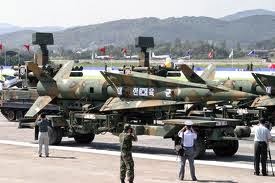
South Korea on Monday approved a plan to purchase scores of Patriot Advanced Capability-3 missiles from the U.S. for deployment from 2016-2020, the state defense acquisition agency said.During a top defense decision-making meeting presided over by Defense Minister Kim Kwan-jin, Seoul endorsed the plan that also includes upgrading the current missile interception system from 2014 through 2020. The upgrading work includes enhancing radars, launchers and control programs.

The government has set aside a budget of between 1.3 trillion won ($1.25 billion) and 1.4 trillion won for the plan aimed at countering North Korea’s persistent missile threats. Seoul plans to purchase the hit-to-kill PAC-3 missiles from the U.S. through a government-to-government foreign military sale method, while the project to upgrade the interception system will be carried out through a competition, which would invite European firms such as MBDA of Germany.

Seoul has been pushing to upgrade its interception system and purchase advanced missile interceptors as it seeks to build its own independent missile defense system, called the Korea Air and Missile Defense.The KAMD is a low-tier, multiple-interception program, which destroys incoming missiles at an altitude of 40-50 km with multiple interceptors. Currently, Seoul has PAC-2 missiles with fragmentation-type warheads, less lethal than the PAC-3, which employs “hit-to-kill” technology.


http://www.koreaherald.com/view.php?ud=20140428001318


Monday, April 14, 2014

South Korea deploys radars to combat 'drones' from the North


An advanced Radar system is being deployed by the South Korean military amid fears that North Korea could use unmanned aerial vehicles to launch an attack with biological or chemical weapons.

South Korea has purchased 24 long-range radars from and has been testing the equipment for frontline defence and to protect key locations in Seoul.

Friday, April 11, 2014

South Korea shows interest to purchase Israeli RPS-42 tactical air surveillance radar

The RPS-42 is a member of RADA's Multi-Mission Hemispheric Radar (MHR) family, enabling advanced protection solutions.


South Korea is pushing to buy about 10 low-altitude radars from Israel to better detect small unmanned aerial vehicles (UAVs) and thereby counter threats posed by North Korean drones, military officials said Wednesday. The military has been hastily preparing measures to step up its surveillance capability, in the wake of the discovery of three small UAVs near the tensely guarded border with North Korea in recent weeks.

The suspected North Korean drones equipped with cameras, which contained photos of Seoul's presidential office and military installations near the border, revealed holes in South Korea's air security.The South currently operates TPS-840K missile control and ground surveillance radars, which are limited in detecting small aircraft such as the suspected North Korean drones that were discovered only after they've fallen on the ground.

To fill the holes in air security, the military has hurriedly assigned 200 billion won (US$191 million) to buy 10 low-altitude radars and other surveillance equipment this year to deploy them in major posts and front-line troops, a government official said."The government decided to transfer some budget from another acquisition program to purchase the low-altitude surveillance radars capable of detecting small UAVs as soon as possible," the official said, asking for anonymity. "The program is aimed at finalizing a contract within this year to be able to deploy them by next year."

A team of military and acquisition officials has been dispatched to Israel to visit Rada Electronic Industries, which produces RPS-42 Tactical Air Surveillance Radar System, a potential candidate.The RPS-42 Tactical Air Surveillance Radar System is optimized to detect, classify and track all types of aerial objects at altitudes from 30ft to 30,000ft within a radius of up to 30km. Among these objects are fighters, helicopters, UAVs, transport aircraft, and others.

The military is also pushing to supplement its existing surveillance equipment, such as the Thermal Observation Device (TOD) and multipurpose telescopes deployed near the border.A laser weapon system that can effectively destroy an approaching UAV is considered for integration with the low-altitude surveillance radar. Germany's Rheinmetall Defence is a potential provider.A multipurpose anti-air gun, which integrates the 30 mm self-propelled gun K-30 and Chiron anti-air missile, can be placed in major posts to supplement the existing air defense system, which includes Vulcan guns.

Local media criticized the military's hastily prepared measures to step up its surveillance capability as they only came after revelations that the drones flew undetected across the border despite the South having known about the North's development of the UAVs as asymmetric weapons.

US-South Korean military exercises


Thursday, April 10, 2014

South Korea seeking AIM-9X-2 Sidewinder missiles from U.S.

Wikipedia


South Korea is seeking AIM-9X-2 Sidewinder missiles and associated support from the United States through a Foreign Military Sales deal worth $98 million.

The U.S. Defense Security Cooperation Agency, which notified Congress earlier this week of the possible sale to the Republic of Korea, said the U.S. Department of State has already signed off on the deal.


http://www.upi.com/Business_News/Security-Industry/2014/04/09/South-Korea-seeking-Sidewinder-missiles-from-US/1111397034251/

Saturday, April 5, 2014

S. Korea test-fires ballistic missile capable of striking North Korea


South Korea has successfully test-fired an extended range ballistic missile and will develop a longer range missile capable of striking all parts of North Korea, Seoul's defense ministry said Friday.

South Korea currently operates Hyunmoo ballistic missiles with a range of 300 kilometers, and has been developing longer range missiles to beef up its defense against Pyongyang under a new missile deal with the United States.The guidelines revised in October 2012 allow Seoul to extend the maximum range of its ballistic missiles from 300 km to 800 km. It limits the maximum payload to 500 kg for 800-km range missiles, while allowing heavier payloads for missiles with shorter ranges.

"The missile development is part of follow-up measures after South Korea and the United States revised the missile guidelines," ministry spokesman Kim Min-seok said in a briefing. "We are now developing 500-km ballistic missiles and plan to make 800-km missiles in the future." He didn't elaborate on the deployment schedule.The state-funded Agency for Defense Development on March 23 tested a ballistic missile with a range of 500 km and a payload of 1 ton at a firing range in Taean, South Chungcheong Province, and it hit the intended target, a senior official said.

Following the deployment of the 500-km range missile next year, the military plans to develop an 800-km missile with a payload of 500 kg and test-fire it the same year, the official said.

http://www.globalpost.com/dispatch/news/yonhap-news-agency/140404/s-korea-test-fires-ballistic-missile-capable-striking-north

Friday, April 4, 2014

South Korea to purchase advanced surveillance radar to detect drone launched by North Korea


A drone of North Korean army was displayed during a military parade in Pyongyang


South Korea was reportedly considering purchasing advanced surveillance radar to spot small- sized, low-flying unmanned aerial vehicle (UAV) dispatched from the Democratic People's Republic of Korea (DPRK). The South Korean news agency Yonhap, citing a military official, reported that the military was mulling acquiring the low-altitude surveillance radar from overseas as it failed to detect several unmanned aircrafts deployed by the DPRK recently.

The DPRK has flew several pilotless airplanes for the reconnaissance purpose to South Korea, which were spotted by the naked eye in frontline areas, but were depicted as birds on the radar screen due to their small size.The South Korean Army was operating the low-altitude surveillance radars called TPS-830K, but it rarely detected the small, unmanned aircrafts believed to be flown by the DPRK.

An official at the Defense Acquisition Program Administration, the country's arms procurement agency, said over phone that he hasn't heard of whether the Joint Chiefs of Staff (JCS) has decided to buy it, noting that the JCS should make a decision to purchase any military devices.The South Korean military came to a tentative conclusion that two drones, discovered in inter-Korean border areas recently, came from the DPRK, according to government sources cited by Yonhap.

Seoul's Defense Ministry said Tuesday that it collected debris of an UAV, which is 1.8 meters long and 2.4 meters wide, on the Baengnyeong Island just south of the Northern Limit Line (NLL), or the disputed sea border with the DPRK.The unmanned aircraft was discovered by an islander Monday when the DPRK fired about 500 hundreds of shells, around 100 of which fell into South Korean waters. In response, the South Korean military fired some 300 rounds of artillery across the maritime border into the DPRK waters.

The UAV, found in the border island, was the same kind of the one spotted on March 24 in Paju, close to the land border between the two Koreas.Presidential spokesman Min Kyung-wook told reporters that he was briefed on interim investigation findings from the presidential office of national security, which was looking into the case with a view that the drones came from the DPRK.Min said a final result of the probe had yet to come, but he noted that regardless of where the UAVs came from, Seoul will have to draw up countermeasures against such spy drone which is hard to detect by radar.

An official at the Defense Ministry told Xinhua that the drones were taking aerial shots of areas near Seoul and its nearby Gyeonggi Province, noting they were too small to detect by radar.The drones, which crashed on the border areas recently, reportedly carried cameras, which took photographs of military installations and even the presidential office Blue House.

Wednesday, April 2, 2014

Two C-130Js Delivered to Korea


Two C-130J Super Hercules aircraft operated by the Republic of Korea Air Force (ROKAF) ferried from the Lockheed Martin facility here today to South Korea.

ROKAF accepted delivery of these two aircraft last week at a ceremony in Marietta, home to the C-130J Super Hercules production line. These Super Hercs will be flown by ROKAF aircrews, which currently operate a fleet of C-130H legacy aircraft.The ROKAF’s new Super Hercules is the longer fuselage or “stretched” combat delivery variant. Lockheed Martin is also contracted to provide a two-year support program to the ROKAF, including C-130J aircrew and maintenance training.

Tuesday, April 1, 2014

South Korea finds crashed UAVs on border island

These are the North Korean UAV's that crashed

http://www.asiandefencenews.com/2014/03/pentagon-says-north-korea-developed.html


An unidentified unmanned airplane fell on one of the five South Korean islands near the inter-Korean western sea border, the official Yonhap News Agency reported on Tuesday, citing a government source.The unmanned aerial vehicle crashed at around 4pm on Monday local time on Baengnyeong Island, just south of the Northern Limit Line (NLL), or the disputed maritime border between the two Koreas, said the source.

The South Korean military took the pilotless airplane from the border island to identify where the unmanned aerial vehicle (UAV) came from.The UAV, detected Monday, was the same kind as the one found on March 24 in Paju, 50km northwest of Seoul.

The source said that South Korea's intelligence and military officials were probing whether the two airplanes came from North Korea.North Korea conducted its live-fire drill Monday afternoon, firing around 500 rounds of shells and projectiles with its artillery and multiple-rocket launchers from its shoreline gun positions in the country's southeastern region near the NLL.

Some 100 of them landed in South Korean waters 2-3 km south of the NLL, the scene of the recent inter-Korean naval skirmishes. In November 2010, Pyongyang shelled Yeonpyeong Island, one of the five border islands near the NLL, with its shoreline artillery, killing four people.

North and South Korea exchange fire with hundreds of artillery shells over disputed border


North and South Korea traded hundreds of rounds of live artillery fire across their disputed Yellow Sea boundary today. It forced South Korean islanders to take shelter the day after the North raised tensions by threatening a new nuclear test. The South said it had fired more than 300 shells in response to the North firing more than 500 shells during its three-hour military exercise.

Sunday, March 30, 2014

North Korea stages live-fire military drill prompts South to return fire


North Korea has fired artillery shells into South Korean waters, apparently in reaction to military exercises being conducted between the U.S. and South Korea.Seoul responded immediately on Monday by shelling North Korean waters. Officials say no shells hit any land areas on either side and no one was injured. South Korean officials said some residents of border islands were evacuated to shelters as a precaution.

The North in recent weeks has increased threatening rhetoric and conducted a series of rocket and ballistic missile launches into waters off the west coast of the Korean peninsula.Pyongyang threatened on Sunday to conduct what it called "a new form of nuclear test" after the U.N. Security Council condemned the North's recent ballistic missile launches.

A statement Sunday from the North's Foreign Ministry said it was intolerable that the Security Council would "turn a blind eye" to U.S. nuclear war exercises while denouncing the North Korean army's self-defensive rocket launch exercises.After North Korea fired two medium-range ballistic missiles into the sea off the east coast of the Korean peninsula Wednesday, the Security Council condemned the launches the next day, saying they violated U.N. resolutions.

Pyongyang routinely calls military drills between South Korea and the U.S. a rehearsal for invasion.

Friday, March 28, 2014

Republic Of Korea Air Force Accepts First C-130J Super Hercules

Photo Lockheed Martin


The Republic of Korea ushered in a new era in air mobility today with the delivery of the country’s first two C-130J Super Hercules aircraft at the Lockheed Martin facility here. With today’s delivery, South Korea became the 14th country to fly the proven C-130J.

South Korea’s new Super Hercules will be operated by Republic of Korea Air Force (ROKAF) aircrews, which currently operate a fleet of C-130H legacy aircraft.
“For almost three decades, Republic of Korea Air Force crews have relied on C-130s to support humanitarian and peacekeeping missions in the Pacific Rim region. The arrival of South Korea’s new Super Hercules fleet ensures that these critical missions not only will continue, but extend for many more decades the added capabilities only the C-130J can provide,” said George Shultz, vice president and general manager, C-130 Programs. “Lockheed Martin values its longtime partnership with South Korea and we are honored to welcome it to the Super Hercules family.”

The ROKAF’s new Super Hercules is the longer fuselage or “stretched” combat delivery variant. Lockheed Martin is also contracted to provide a two-year support program to the ROKAF, including C-130J aircrew and maintenance training.

Sixteen countries have chosen the C-130J Super Hercules to meet their air mobility needs. With more than 1 million flight hours, the C-130J is the standard by which all other airlift is measured in terms of availability, flexibility and reliability. Over the past decade, C-130Js have been deployed in two combat theaters where they operate at a very high tempo efficiently and reliably.

In non-combat — but equally harsh environments — C-130Js are often the first to support humanitarian missions such as search and rescue, aerial firefighting in the U.S., and delivering relief supplies after earthquakes, hurricanes, typhoons and tsunamis around the world.
Headquartered in Bethesda, Md., Lockheed Martin is a global security and aerospace company that employs approximately 115,000 people worldwide and is principally engaged in the research, design, development, manufacture, integration and sustainment of advanced technology systems, products and services. The Corporation’s net sales for 2013 were $45.4 billion.

Thursday, March 27, 2014

U.S. demands sharp rise in price of F-15K's sensor parts


The United States has demanded that South Korea accept a six-fold increase in the purchase price of F-15K's night sensors, citing discontinued production, a senior defense ministry official said Thursday.The South Korean Air Force currently operates 60 F-15K Slam Eagles acquired from U.S. aerospace contractor Boeing through two deals in 2002 and 2008. It received the last jet in 2012.

Lockheed Martin installed 10 Tiger Eye sensor suites in the first batch of 10 jets in 2009 to help them fly at a low altitude in order to avoid radar detection and launch precision attacks at night and in bad weather. They consist of navigation systems and targeting pod devices.Although Lockheed Martin had promoted the Tiger Eye as the advanced navigation and targeting system for the South Korean contract, Seoul has been struggling with its maintenance of the discontinued model in the past several years.

"U.S. officials are asking for six times the initial price, saying the manufacturing of the Tiger Eye has been halted," the ministry official said on the condition of anonymity, without disclosing price details price of the components.The U.S. had raised suspicions that South Korean engineers were illegally disassembling the sensor installed under F-15K's fuselage, prompting defense officials of the two nations to launch a week-long investigation in June 2011.

"South Korea is the only country that still uses the Tiger Eye," another military official said. "The U.S. officials said the price hike of the Tiger Eye is inevitable, as only a limited number is manufactured at South Korea's request, though its production had already been stopped."   Following the discontinued production of the Tiger Eye, South Korea in 2010 bought 40 Sniper Advanced Targeting Pods (ATP) from Lockheed Martin, which have an enhanced laser designator and tracker for laser-guided bombs.

The pod features a third-generation forward looking infrared (FLIR) receiver, which allows observation and tracking in darkness.As part of efforts to handle the sudden price hike in major components for weapons, the defense ministry is pushing to adopt a rotational fund system to buy key components in advance if they are expected to be phased out soon.The ministry said it is working on details of the new system with a goal of implementing it next year.

Read More:
http://english.yonhapnews.co.kr/national/2014/03/27/93/0301000000AEN20140327006151315F.html

Tuesday, March 25, 2014

Korea Eyes Military Intelligence Deal with U.S., Japan


Seoul aims to conclude a memorandum of understanding with Washington and Tokyo to protect military intelligence. The agreement is seen as a more viable alternative to a military intelligence-sharing deal with Japan that the government had to drop in 2012 after fierce opposition at home."We can no longer neglect the issue of trilateral security cooperation among Seoul, Washington and Tokyo as North Korea’s nuclear and missile threats increase," a government source said on Sunday. "We're considering an MOU among defense ministers or defense intelligence chiefs to protect military intelligence instead of a bilateral agreement that could cause political controversy."

Such agreements already exist between Seoul and Washington and between Washington and Tokyo, but not between Seoul and Tokyo. The latest approach seems to be an attempt to seek a trilateral deal at a time when it is difficult for Seoul and Tokyo to conclude any purely bilateral agreement.Washington was upset that the original deal fell through, but anger in South Korea over the Japanese government’s lurch to the far right put the brakes on any progress.But Japanese Prime Minister Shinzo Abe recently backtracked over plans to revise statements from previous administrations admitting wartime atrocities, which led to a trilateral summit on the sidelines of the Nuclear Security Summit in The Hague.


Monday, March 24, 2014

South Korea Opts for Lockheed Martin F-35 Lightning II Aircraft


The Republic of Korea has formally selected the Lockheed Martin F-35 Lightning II aircraft for its F-X fighter acquisition program.

Following a comprehensive evaluation process for their F-X program, the Republic of Korea becomes the third Foreign Military Sales country to procure the F-35, joining Israel and Japan who selected the F-35A in 2010 and 2011, respectively.

The program also currently includes participation from three U.S. military service branches and eight international partner countries. Three distinct variants of the F-35 will replace the A-10 and F-16 for the U.S. Air Force, the F/A-18 for the U.S. Navy, the F/A-18 and AV-8B Harrier for the U.S. Marine Corps, and a variety of fighter aircraft for at least 10 other countries.


Monday, March 17, 2014

Philippines and South Korea to sign P18.9-B jet deal this week


The Philippines and South Korea are expected to sign this week a multi-billion peso deal that would allow the military to acquire 12 lead-in fighter trainer jets.“Within next week, starting Monday, within that week, we will have a signing of contract for the FA-50 (jets) with the South Korean government,” Defense Secretary Voltaire Gazmin told reporters here.

He said a deal involving the purchase of eight combat utility helicopters from Canada may also be forged this week.Last month, the defense department and the Korea Aerospace Industries (KAI) completed the negotiations for the lead-in fighter trainer jets project which has an approved budget of P18.9 billion.

KAI will be supplying FA-50 jets, which are derived from the family of T-50 advanced jet trainer air assets. The jets will be used for territorial defense operations.The first batch of jets is expected to be delivered late next year. KAI is required to deliver at least two air assets within 18 months after the signing of the contract. 

Thursday, March 13, 2014

South Korea to upgrade its Patriot missile system


South Korea will buy upgraded Patriot surface-to-air missiles next year to improve its defenses against North Korea, officials said Wednesday.South Korea currently has 48 PAC-2 missiles from Germany, and plans to add PAC-3 missiles, which have improved anti-ballistic missile capability, to its arsenal next year, the Yonhap News Agency reported.

The country will also upgrade its fire control system to make it capable of firing both types of missiles.The plan was approved by Defense Minister Kim Kwan-jin in an effort to open bidding in June and have a contract finalized by December.

"Once the Patriot missile system is upgraded, it will be able to directly hit incoming missiles to reduce damage on the ground," Baek Yoon-hyung, spokesman for the Defense Acquisition Program Administration, said in a briefing Wednesday.

Wednesday, February 26, 2014

Korea Aircraft Industries promotes Devil Killer UAV as maritime weapon


Korea Aerospace Industries (KAI) is marketing a small unmanned air vehicle (UAV) which can also be used as a precision munition as a viable maritime capability deployable on board naval vessels.The 'Devil Killer' UAV could previously only be launched from ships with the aid of rocket boosters. However, the company has now introduced a canister containing a compressed air mechanism to provide the initial launch thrust required to enable the system to become airborne. This thrust capability enables the system to be deployed at sea. Once launched, switch blade wings unfold and two electric ducted fans take over the propulsion task for the rest of the flight.

Speaking to IHS Jane's at the Singapore Airshow on 14 February, KAI's senior manager and chief of international marketing Jei Yai Moon said that the company is now marketing the UAV as a munition that feasibly can be deployed at sea as well as being an effective land-launched system."The Devil Killer UAV is ready for production. Unfortunately we do not have a customer yet. We will continue to market it", said Moon.

Described by the company as a "tactical suicide combat UAV", the Devil Killer is designed to loiter above potential targets. The UAV would be guided by an operator onto its designated target using a video data link and would then crash itself onto the target, detonating a 2 kg payload located between its wings.The Devil Killer is 1.5 m long and has a wingspan of 1.3 m. It weighs 25 kg when armed and has demonstrated in-flight top speeds of 400 km/h. It has a maximum range of 40 km.

Wednesday, January 15, 2014

Eighteen F-4E Phantom aircraft stage Elephant Walk in South Korea


18 F-4E belonging to the 17th Fighter Wing based at Cheongju airbase, about 100 km to the southeast of Seoul, taxing along the runway in rows of three Phantoms.

The reason is that these kind of training activities, with several planes taxiing in close sequence or formation along the runway, is conduct with a dual purpose: first, to test squadrons readiness to war time operations; second, as a show of force, to impress the threatening neighbour North Korea.

Image credit: ROKAF